Showing posts with label News and journalism. Show all posts

Thursday, December 26, 2019

Facts are not important, politics is

This was posted by a very liberal long-time friend and fellow cleric of mine.


 I commented thus:
The Holy Family were never refugees. They did not move to Egypt illegally. They moved from Roman-controlled Judea to Roman-controlled Egypt. It was literally like if you moved from Tennessee to Kentucky.
Why did the Holy Family need to move to Egypt in a hurry? The answer is one word: government. Yet to my friend and others of his leanings, government is always the solution, never the problem.

But the facts don't matter when political hit jobs can be done even on pretense.

Update: In response to another minister's query (who is a friend and not just on FB), I wrote this:

Both Judea and Egypt were occupied and governed by Rome; of course you know this. Just as the Romans changed the name of the formerly independent country of Judah to Judea, they changed the name of Egypt to Aegyptus. But the key point is not really that they changed the name, but that they had the power (by force of arms, to be sure) to do so.

To say that Egypt and Judea were "countries" under Roman rule is about as accurate as saying that Kazakhstan was a country under Stalin. Maybe it was once, and wanted to be again, but in 1948 it was not. It was a Soviet province and nothing more.

Likewise Judea and Aegyptus. The Holy Family changed province of residence but it did not change who governed them.

Now, whether the Holy Family were refugees. Yes, Matthew is clear that they made the trek to Aegyptus because of Herod's lethal plans. But again, while they changed provincial government, there was no political difference, just as if someone moved from Virginia to North Carolina.

Which are states I use on purpose because, as I am sure you know, Virginia's Gov. Northam has publicly stated that he will call out the National Guard to enforce the state's new, draconian gun laws - laws that have caused 90 percent of the state's county commissions to declare that they will prohibit any local law officers to enforce or assist state authorities in enforcing.

Which is to say, Gov. Northam is in fact directly threatening to use actual soldiers to kill people who have committed no offense against the peace or safety of anyone at all or even can be remotely considered such a threat.

Think that cannot happen? In November of last year, Maryland police shot to death a 61-year-old man in his own home who had committed no crime but for whom a court had issued a "red flag" order.

IMO, Gov. Northam is today's Herod. So when (not if, btw) some Virginia 2nd Amendment advocates decide to leave potentially-fatal Virginia to live in North Carolina, will they be refugees? If not, why would the Holy Family have that status?

Tomorrow in my sermon I will quote the Rev. Joy Carol Wallis thus,
Herod represents the dark side of the gospel. He reminds us that Jesus didn't enter a world of sparkly Christmas cards or warm spiritual sentiment. Jesus enters a world of real pain, of serious dysfunction, a world of brokenness and political oppression.
So far, so good. Agree 100 percent. But then:
Jesus was born an outcast, a homeless person, a refugee, and finally he becomes a victim to the powers that be. Jesus is the perfect savior for outcasts, refugees, and nobodies.
I will omit the italicized part because it is simply incorrect.
  • Jesus was not, in fact, born “born an outcast." He was born a Jew in a nearly-totally Jewish land to a solidly ordinary and righteous family.
     
  • He was not "a homeless person" because his parents owned a home in Nazareth. If a Nashville woman gave birth to a child in Knoxville, would that make the baby homeless?
     
  • And as I have said, he was never "a refugee” at all, much less born one in his father’s ancestral town.
     
  • That “Jesus is the perfect savior for outcasts, refugees, and nobodies” is true, but then, he is also the perfect savior for absolutely everyone else.

Monday, August 15, 2016

The uncurious minds of news reporters

As an illustration of the typical cluelessness of the American media, I offer this piece on the future of the United States artillery from The National Interest, "The US Army's New Battlefield 'Big Gun' Has a Dangerous Defect."


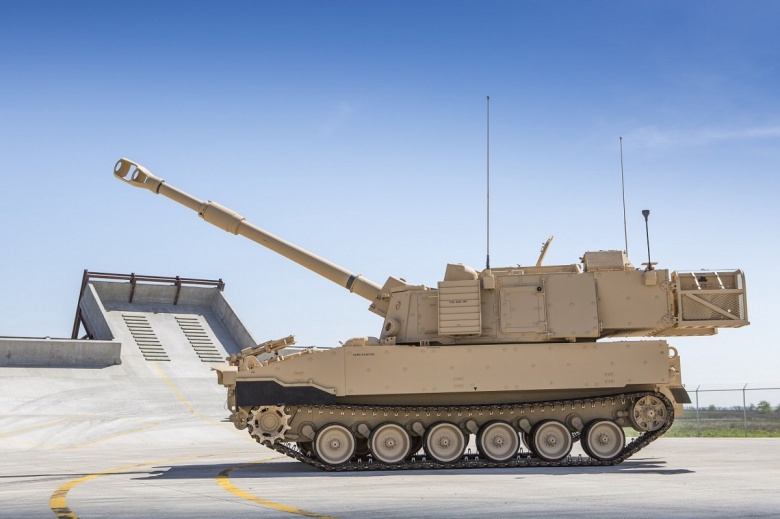
The issue of the article is the lack of a fully-functional fire-suppression system aboard the "Paladin M109A7 PIM — the latest in America’s line of tracked artillery pieces ," photo above. But the fire-suppression system is not my point here. In the article we read:
In 2002’s Operation Anaconda, the U.S. clashed with hundreds of Taliban and Al Qaeda fighters without any large-caliber artillery. Yet with a more entrenched U.S. troop presence in the following years came an increasing reliance on big guns which — in places — fired relentlessly.

Case in point, one artillery battalion in Afghanistan’s mountainous and remote Kunar province lobbed around 25,000 rounds — including mortar rounds — in a year, according to the New York Times.
A 155mm howitzer battalion has 18 howitzers, which we colloquially refer to as "guns" even though they are not guns, they are howitzers.

Now do the math on that artillery unit in Afghanistan and you will immediately see why the story should read, "one artillery battalion in Afghanistan’s mountainous and remote Kunar province lobbed a mere 25,000 rounds  in a year."

Although neither The National Interest nor The New York Times identifies what battalion fired those 25,000 rounds, the odds are near certain that it was a battalion equipped with the M777, 155mm howitzer. Wikipedia has a decent write-up.

As you can see, it is significantly different from the Paladin pictured above, although both guns shoot exactly the same ammunition. The Triple-7 is towed by a truck rather than self-propelled like the M109-series howitzers. The truck also carries crew, ammo and supplies. Towed guns were used in Afghanistan because they were easier to deploy and because in many cases were simpler to move from one place to another over the rugged terrain (mainly because they are so much lighter).

So a battalion of artillery has 18 of these guns. Here is the arithmetic that is so simple anyone but an NYT reporter can do it, including my daughter who was only 2 years old when I retired from the Army and so did not grow up in this culture:

Question: "Is 'fired relentlessly' and apt term for a battalion of 18 guns that fired 25,000 rounds in a year?"

(playing Jeopardy music . . .)
  1. 25,000 / 365 days per year = 68.5 rounds per day fired, average.
  2. 68.5 rounds per day / 18 guns = (TA DA!) fewer than four rounds per day per gun. 
Does that sound "relentless" to you? The maximum rate of fire of the M777 is 5 rounds per minute. But timing begins at the zero-second mark when the first round is fired. That means that 36 seconds later, that crew is done for the day. The crew spent 0.043 percent of the day "relentlessly" firing their howitzer.


This is by no means any criticism of the artillery crews. Artillery is an "on-demand" combat weapon. It does not make up on its own where or when to shoot. Artillery fire is requested by other arms, mainly infantry and armor, but can also be called for by aviators or assigned by higher commanders. At any rate, what this extremely low use of artillery means is one or more of the following,
  • Actual battles with enemy forces were relatively rare,
  • When they did occur they were small unit actions and/or at such close ranges that using artillery was impractical
  • Rule of Engagement were very restrictive on using a weapon of such destructive power,
  • Target location was imprecise,
A little historical scale now. In the Korean War, 
In one 24-hour period during the battle for Bloody Ridge, the 15th FA Bn fired 14,425 rounds. Additionally, from 26 August through 2 September 1951, in support of the 2nd ID during the battle of Heartbreak Ridge, the 15th FA Bn fired 69,956 rounds.
That battalion's guns fired an average of 601 rounds each in that one day, or 150 times as many as that unit cited in the NYT. But consider that 601 battalion rounds per day works out to 33 rounds per gun per hour, or about one every two minutes - and since this battalion used 105mm howitzers, that was much less physically challenging than shooting a 155mm gun since the heavier gun is well, heavier, with its munitions weighing about three times as much as the 105mm.

The trick for the 15th FA gunners in Korea was not shooting every 120 seconds, which is quite easy on that gun (my first unit in my service was in a 105mm unit). The trick is to keep that going for 24 straight hours. I guarantee those gunners were exhausted at the end!

The second example, 69,956 rounds in a six-day period, is a lower rate of fire, 486 battalion rounds per hour, or 27 per gun per hour, a little under one round every two minutes. Again, not physically challenging unless you keep it going for six straight days!

But either case would certainly qualify as "firing relentlessly."

My point in this is that you may now understand why I am very skeptical of what the civilian press reports about military matters, and the more technical the subject is the the more skeptical I get. When I was not blowing things up in the artillery, I served in my alternate specialty of public affairs, including as chief of media relations for XVIII Airborne Corps and Ft Bragg. With not many exceptions, reporters tend to be uncurious people. They generally just write down what someone tells them and that's that.

As my boss used to say, "Reporters don't say what happened. They say what somebody said happened." That's a good thing, actually; you don't want reporters just making stuff up (which a fair number do anyway) but jeepers, who said that this firing in Afghanistan was "relentless?" NYT reporter Wesley Morgan did, that's who, and he thought so because he didn't have the curiosity to run the numbers.

That said, the Interest's brief commentary on the lack of long range on our howitzers is well taken. The concluding line is, "in an artillery war, range is everything." Yet that is only half right. There are two things that are everything in an artillery war: range, accuracy, and responsiveness.

Oh, wait, make that three three things that are everything: range, accuracy, responsiveness and lethality.

Four! In an artillery war, there are four things that are everything: range, accuracy, responsiveness, lethality, and mobility.

In an artillery war there are five things that are everything: range, accuracy, responsiveness, lethality, mobility, and logistics... .

See my point? One thing is not everything in any operation or war. Why does this reporter think so? Well, it makes a good tag line. But also because frankly, he don't know nuthin' about what he's writing about.

BTW, my daughter who knew PDQ that 25K rounds in a year was not "firing relentlessly" is a chemical engineer, so she went to the math right away. But really, this isn't math, it's simple arithmetic and logic, grade school level.

Additional reading: "U.S. Army Field Artillery Relevance on the Modern Battlefield"

Oh, and just for the humor break, my closing grafs about the things that are everything in artillery war uses this famous template.