Showing posts with label Military and strategy. Show all posts

Monday, October 21, 2019

Kurds, Turkey, Syria - and US forces


Link to article


I worked with Petraeus when we were both at the Pentagon. He was a major then, promoted to Lt. Col. not long after I came to know him. I respect him immensely. He and US Marine Gen. James Mattis were the key, essential players in redirecting US strategy in Iraq away from the disastrous Rumsfeld model. I have never met Mattis, but have nothing but greatest respect for him. Marines I have known who worked with him are in awe, and that says a lot. 


So when Petraeus and Mattis both sharply disagree with the administration's decision, I have no choice but to pay attention. 


But having said that, I would say their view is very solidly an establishment one. S
enior military officers prosper very well. They gain their rank and status not only because of the military skills, but their political skills as well. They retire as comfortable members of the country's political class and often wind up with lucrative corporate consultancies and defense-related boards. I have seen this play out with three- and four-star generals I worked for. I do not blame them, actually, but we need to understand that they are far too invested in the status quo to try to change it. It what got them their rank and positions in the first place. Their incentives to change it are exactly zero. (This also applies to senior diplomatic personnel.) 

I wrote a long essay in 2008 on why the US should exit NATO, but of course, with both the outgoing Bush and incoming Obama administrations, there was so much Old Guardism at work that there was (and is) no chance. Petraeus and Mattis (and I, for that matter) were raised militarily and strategically with a Cold War, organizational mind-think that has not significantly subsided. They still think that what G. Washington warned against, "entangling alliances," should be normative and are simply the way things get done. 

Fifteen years ago Petraeus and Mattis and some others were the Young Turks. Now they are the Old Guard. And that should temper how we assess what they say. 


None of this is to say that all will turn out well today. In fact, it would be insane to say so. I mean, point to one time in the last several hundred years that things have worked out well in the Middle East! 

But it is also a real error to assume that had a mere 50 US troops been left in place, that everything would now be unicorns and rainbows. Turkey did not ask our permission to incur. They simply announced they were doing it. Turkey did not ask Trump to withdraw the troops; Trump just got them the heck out of the way. It would be nice for Petraeus and others to say how they would have responded to Turkey's announcement that it was coming, instead of just clutching their pearls in protest. They know better because they many times had to think through questions such those as I pose later in this essay. They know how to do it, but now they do not need to do it because the media will smile kindly upon them if they don't. And that is the problem.

My take: 


There is no solution to the problem of the Kurds. The Kurds have been screwed, they are being screwed, and they will continue to be screwed, because only Iraq, Turkey, and Syria (and Iran, as if) can resolve the issue and all of them see the Kurds as tools to be used for their own purposes against the others. No Western nation can possibly have any effective role - not the USA, not Britain, not NATO, not nobody.

The Kurdish PKK is Turkey's main target. The PKK, Partiya KarkerĂȘn Kurdistan, is a Marxist faction that has been launching cross-border raids into Turkey since 1984 - as have other Kurdish factions. The PKK is classified as a terrorist organization by the Turks -- and by the US, the European Union, NATO, and even Japan.

Anyone who is denouncing the withdrawal of a few dozen US troops from the affected area of Turkish operations, insisting they should not have been withdrawn, should first answer one basic question:
 
If you were president, would you have ordered US troops to stay in place and resist the Turkish incursion by force of arms? 

Then proceed to these:
  • If you would have given that order:
    • What is your strategic goal?
    • How many US troops are you are willing to have killed to attain that goal? 
    • Once US troops are killed, what would be your response? 
    • How many Turks are you willing to kill to attain the strategic goal? 
    • Would you escalate the violence if the Turks do not withdraw? If so, would you restrict US combat strikes to only the incursion area, or would you strike Turkish forces still inside Turkey proper? For either answer, explain why.
    • How will you ensure the safety of thousands of US Air Force personnel, aircraft, special weapons, and family members at the Turkish air base at Incirlik, Turkey? There are also large numbers British and Spanish military personnel there. 
    • Would you ask for a congressional authorization of use of military force against Turkey? 
      • If yes, are you really willing to go to war with a decades-long, US-ally member of NATO? 
      • If not, why not? Would you wage war against Turkey anyway?
          
  • If you would not have given that order:
    • What is your strategic goal?
    • Why would you leave the troops in place rather than withdraw them, if they are not to fight?
    • What would you have done specifically different from what the administration has done, and why?
Anyone who will not address those topics before slamming the administration is not thinking about this seriously at all. And yes, that includes congressional members of both parties and, I regret, many of my ministry colleagues who have posted about this topic.

Finally, here is a pretty well-balanced article that explains why Trump did not sell out the Kurds while also pointing out that Erdogan is pretty much a thug himself. (But we knew that.)

Monday, August 15, 2016

The uncurious minds of news reporters

As an illustration of the typical cluelessness of the American media, I offer this piece on the future of the United States artillery from The National Interest, "The US Army's New Battlefield 'Big Gun' Has a Dangerous Defect."


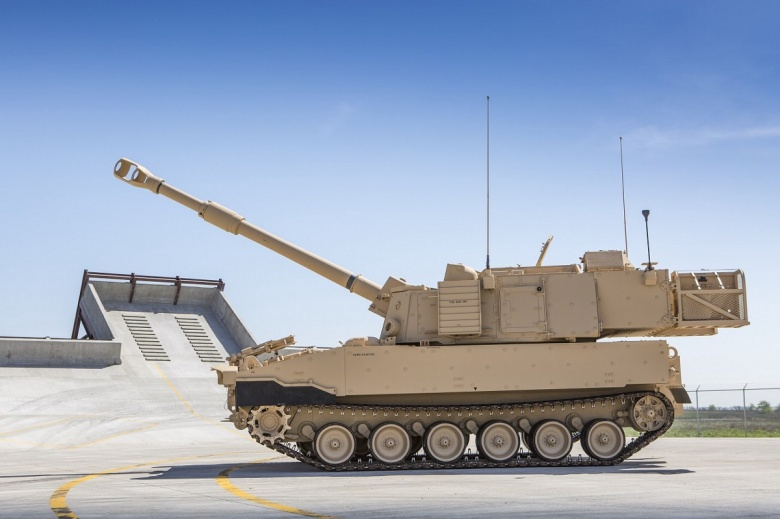
The issue of the article is the lack of a fully-functional fire-suppression system aboard the "Paladin M109A7 PIM — the latest in America’s line of tracked artillery pieces ," photo above. But the fire-suppression system is not my point here. In the article we read:
In 2002’s Operation Anaconda, the U.S. clashed with hundreds of Taliban and Al Qaeda fighters without any large-caliber artillery. Yet with a more entrenched U.S. troop presence in the following years came an increasing reliance on big guns which — in places — fired relentlessly.

Case in point, one artillery battalion in Afghanistan’s mountainous and remote Kunar province lobbed around 25,000 rounds — including mortar rounds — in a year, according to the New York Times.
A 155mm howitzer battalion has 18 howitzers, which we colloquially refer to as "guns" even though they are not guns, they are howitzers.

Now do the math on that artillery unit in Afghanistan and you will immediately see why the story should read, "one artillery battalion in Afghanistan’s mountainous and remote Kunar province lobbed a mere 25,000 rounds  in a year."

Although neither The National Interest nor The New York Times identifies what battalion fired those 25,000 rounds, the odds are near certain that it was a battalion equipped with the M777, 155mm howitzer. Wikipedia has a decent write-up.

As you can see, it is significantly different from the Paladin pictured above, although both guns shoot exactly the same ammunition. The Triple-7 is towed by a truck rather than self-propelled like the M109-series howitzers. The truck also carries crew, ammo and supplies. Towed guns were used in Afghanistan because they were easier to deploy and because in many cases were simpler to move from one place to another over the rugged terrain (mainly because they are so much lighter).

So a battalion of artillery has 18 of these guns. Here is the arithmetic that is so simple anyone but an NYT reporter can do it, including my daughter who was only 2 years old when I retired from the Army and so did not grow up in this culture:

Question: "Is 'fired relentlessly' and apt term for a battalion of 18 guns that fired 25,000 rounds in a year?"

(playing Jeopardy music . . .)
  1. 25,000 / 365 days per year = 68.5 rounds per day fired, average.
  2. 68.5 rounds per day / 18 guns = (TA DA!) fewer than four rounds per day per gun. 
Does that sound "relentless" to you? The maximum rate of fire of the M777 is 5 rounds per minute. But timing begins at the zero-second mark when the first round is fired. That means that 36 seconds later, that crew is done for the day. The crew spent 0.043 percent of the day "relentlessly" firing their howitzer.


This is by no means any criticism of the artillery crews. Artillery is an "on-demand" combat weapon. It does not make up on its own where or when to shoot. Artillery fire is requested by other arms, mainly infantry and armor, but can also be called for by aviators or assigned by higher commanders. At any rate, what this extremely low use of artillery means is one or more of the following,
  • Actual battles with enemy forces were relatively rare,
  • When they did occur they were small unit actions and/or at such close ranges that using artillery was impractical
  • Rule of Engagement were very restrictive on using a weapon of such destructive power,
  • Target location was imprecise,
A little historical scale now. In the Korean War
In one 24-hour period during the battle for Bloody Ridge, the 15th FA Bn fired 14,425 rounds. Additionally, from 26 August through 2 September 1951, in support of the 2nd ID during the battle of Heartbreak Ridge, the 15th FA Bn fired 69,956 rounds.
That battalion's guns fired an average of 601 rounds each in that one day, or 150 times as many as that unit cited in the NYT. But consider that 601 battalion rounds per day works out to 33 rounds per gun per hour, or about one every two minutes - and since this battalion used 105mm howitzers, that was much less physically challenging than shooting a 155mm gun since the heavier gun is well, heavier, with its munitions weighing about three times as much as the 105mm.

The trick for the 15th FA gunners in Korea was not shooting every 120 seconds, which is quite easy on that gun (my first unit in my service was in a 105mm unit). The trick is to keep that going for 24 straight hours. I guarantee those gunners were exhausted at the end!

The second example, 69,956 rounds in a six-day period, is a lower rate of fire, 486 battalion rounds per hour, or 27 per gun per hour, a little under one round every two minutes. Again, not physically challenging unless you keep it going for six straight days!

But either case would certainly qualify as "firing relentlessly."

My point in this is that you may now understand why I am very skeptical of what the civilian press reports about military matters, and the more technical the subject is the the more skeptical I get. When I was not blowing things up in the artillery, I served in my alternate specialty of public affairs, including as chief of media relations for XVIII Airborne Corps and Ft Bragg. With not many exceptions, reporters tend to be uncurious people. They generally just write down what someone tells them and that's that.

As my boss used to say, "Reporters don't say what happened. They say what somebody said happened." That's a good thing, actually; you don't want reporters just making stuff up (which a fair number do anyway) but jeepers, who said that this firing in Afghanistan was "relentless?" NYT reporter Wesley Morgan did, that's who, and he thought so because he didn't have the curiosity to run the numbers.

That said, the Interest's brief commentary on the lack of long range on our howitzers is well taken. The concluding line is, "in an artillery war, range is everything." Yet that is only half right. There are two things that are everything in an artillery war: range, accuracy, and responsiveness.

Oh, wait, make that three three things that are everything: range, accuracy, responsiveness and lethality.

Four! In an artillery war, there are four things that are everything: range, accuracy, responsiveness, lethality, and mobility.

In an artillery war there are five things that are everything: range, accuracy, responsiveness, lethality, mobility, and logistics... .

See my point? One thing is not everything in any operation or war. Why does this reporter think so? Well, it makes a good tag line. But also because frankly, he don't know nuthin' about what he's writing about.

BTW, my daughter who knew PDQ that 25K rounds in a year was not "firing relentlessly" is a chemical engineer, so she went to the math right away. But really, this isn't math, it's simple arithmetic and logic, grade school level.

Additional reading: "U.S. Army Field Artillery Relevance on the Modern Battlefield"

Oh, and just for the humor break, my closing grafs about the things that are everything in artillery war uses this famous template.

Friday, July 23, 2010

Why Petraeus won't matter

Let me be clear up front: there is no better general for the command of Afghanistan than Gen. David Petraeus. I worked with him when we were both field-grade officers in the Pentagon. And, if the 'Stan is the main effort today in what used to be called the War on Terror, then there is no better general to take Petraeus' place at US Central Command than Gen. James Mattis.


Mattis and Petraeus go together like peas and carrots. They jointly wrote the U.S. Army / Marine Corps Counterinsurgency Field Manual (though Petraeus usually gets sole credit). There are not two senior commanders anywhere as well versed and expert in counterinsurgency (COIN) as these two.

And they will fail.

They will fail not through lack of effort or of insight or because of poor planning and execution. One would be surprised if every operation and campaign they plan is executed much less than magnificently well. There is nothing that they carry with them into Afghanistan that will fail them, nor will they fail their troops.

They will fail because COIN is a tactic, not a strategic objective, and the United States has no strategic objectives regarding Afghanistan. The generals will be conducting COIN for COIN's own sake, not really to achieve something else. As far any anyone can tell, President Obama's only national objective regarding Afghanistan is to pull American forces out by the end of next year. That's not a strategic objective. It's an admission of aimlessness.

This is not a criticism of Obama, though. I would make exactly the same observation of President G. W. Bush until the day he left office. This is one time that Obama could, with integrity, claim that he had been left a mess to clean up. 
Bush never set clear national strategic objectives for Afghanistan qua Afghanistan. From the outset, Bush enumerated the US's objectives almost exclusively in terms of fighting al Qaeda, which had made the country its base and practically its client.

According to US Army Lt. Col. G.K. Herring of the US Army War College, Bush named six national strategic objectives in warring against Afghanistan ("The War in Afghanistan: A Strategic Analysis"): They were (quoting Herring):

1. ... to disrupt, and if possible destroy, the al Qaeda network in Afghanistan.

2. The United States also sought to convince, and if necessary compel, the Taliban to cease their support for terrorist organizations; the al Qaeda network in particular.

3. In addition, the Bush Administration sought to demonstrate that the United States was not at war with the Afghan people or the Islamic religion.

4. The Bush Administration also sought to demonstrate U.S. resolve in this war on terrorism.

5. The strategy also included an objective to build international support for the war in Afghanistan.

6. The final objective of the Bush Administration was to stabilize Afghanistan following the fighting there.
The intent was to avoid creating a vacuum in a notoriously turbulent, unstable nation. When the fighting was over, the Administration wanted to establish conditions that would foster security and stability in Afghanistan. Moreover, the Administration wanted to eliminate the conditions that promoted terrorism and support for terrorism. The Administration’s overall intent was to prevent the re-emergence of al Qaeda in Afghanistan and the use of Afghanistan as a sanctuary for terrorist organizations.
Of these six, only the first and the last actually matter now. And I am not persuaded that the first objective, disrupt or destroy al Qaeda in Afghanistan, matters anymore since al Qaeda's core  has moved to Pakistan where it operates mostly unhindered.

We are nine years into this war and neither of the only two important objectives have been accomplished. Nor is there a realistic prospect that they will be. The Taliban have not thrown in the towel inside the country. The prospect of stabilizing Afghanistan are dim, indeed, since the government there does not operate despite corruption. It operates by corruption. Hamid Karzai is no friend of the United States, but then, neither is any potential  successor.

The fact is that the Obama administration, like Bush's before it, does not know what it is trying to do in Afghanistan.

So why did we invade to begin with? Because the attacks of 9/11, planned, funded and commanded inside Afghanistan, left us no choice. If the US was to defend itself, and importantly, to be seen as defending itself, it had to attack its enemy where the enemy was, and that meant going into Afghanistan. We hoped thereby to cut off the head of the snake by killing and isolating al Qaeda's high command from the most of the rest of its organization and allies around the world.

In that we were significantly successful. However, we were (and are) like the proverbial dog chasing a car - once it catches it, what does it do with a mouthful of bumper? Probably no one in the Bush administration expected the Taliban government to fall so quickly, just as there was likely little understanding that al Qaeda was not nearly as dependent on its Afghanistan base as we thought. No doubt, al Qaeda was disrupted. That there has been no repeat of 9/11 is strong evidence for it, but this cannot be laid solely to the credit of invading Afghanistan (or in my view even primarily to it). The shadow wars of international intelligence, counter-finance and covert operations outside Afghanistan are just as credit worthy, and the truly massive effort al Qaeda mounted against US forces in Iraq sucked lives and resources from al Qaeda that it has never recuperated.

Der Spiegel explores American prospects in Afghanistan in some detail, including this nugget that I think is quite accurate:

The Americans and their allies are winning all the battles, and they are losing the war. This week, the global public is now being prepared for a major, supposedly decisive offensive against Kandahar, the home of the Afghan Taliban. The corresponding rhetoric is reminiscent of the situation reports submitted by the failing generals in Vietnam. And it doesn't take an oracle to predict that a hailstorm of bad news will soon be coming from Kandahar, proving, once again, that this war -- whether it's called a battle against terrorism, counterinsurgency or a peacekeeping operation -- cannot be won.

The majority of the Afghan people, complete with their corrupt, incompetent government in Kabul, no longer seem to have an interest in the success of the Americans and their allies. In fact, today it seems that the Afghans would like nothing more than to see all of the foreigners disappear from their soil and go back to where they came from, even if it comes at the cost of a new Taliban government.
How will the Afghan war end? It won't. It will sputter along for all the foreseeable future, with combat waxing and waning until eventually this president or one of his successors simply tires of it all and leaves the Afghans to their self-inflicted fate. The country has known naught but war since the Soviets invaded on Dec. 25, 1979. The warlords there no longer really know the purpose of their fighting, all they know is the fighting itself. And it will not be long before the same shall be said about the United States.

Update: Two responses via email. First from an active-duty Army lieutenant colonel who has served twice in Afghanistan and commanded a combat battalion in Iraq:

I think your article is spot on. I do think our national strategic objective is a combo of 1) terrain denial to AQI from AFG, 2) elimination of AQI wherever, and 3) advancing human freedom as a way of permanently keeping down AQI. I think however that accomplishing all three objectvices is a gerenational endeavor. As such we need to acknowledge that, announce it to our citizens and to the world and set “timelines” and shape expectations accordingly and then Charlie mike. Otherwise we need to drop objective #3 and bpt work with strong but dirty allies who keep their fokls oppressed and hope that over time we can nudge them to some semblance of democratic freedom that fits their culture.

I think the moral thing to do is to keep all three objectives and know this will take a long time at some cost. But I do not think the American people have the will to see this thru – ours is not exactly a culture of discipline and focused patience. However, the enemies’ culture is.
Second from a U.S. Marine Reserve field grade infantry officer with both combat and civilian years in Iraq, and who has known Gen. Mattis personally for many years.
Unfortunately, I think you nailed it...lack of goal and corruption color everything. Optimally, we extricate our forces with the least amount of damage -- tangible and intangible -- as possible. I trust Petraeus will do that, and keep realistic goals. The only point I don't agree with (based on my folks who have been and have first-hand knowledge) is that I don't think we have lost the Afghani public. At least those beside those who hate ANYONE from outside their square mile of turf.
I'd love to be more optimistic, but just don't see evidence to be.

Tuesday, December 23, 2003

Should we nuke Mecca?

The calculus of revenge: if the terrorists surpass 9/11, how should we respond? 

Dean Esmay was not the first one to suggest American strike catastrophically against the Arab world in revenge for another 9/11-type, or worse, attack against America. But Dean’s proposal is probably the bluntest I’ve seen
U.S. Sister City Program
It works like this: You bomb one of our cities and we unleash 10,000 times the explosives on our "sister city" as a response.

Sister Cities:

New York City - Mecca
Washington D.C. - Medina
Los Angeles - Riyadh
Chicago - Damascus
San Francisco - Tehran
Seattle - Tripoli

And so on... You get the idea.
I simply do not understand why this seems acceptable to some people. It is a shockingly immoral proposal. Simply making war is never the purpose in itself of war. That is, simply inflicting destruction upon the enemy or the enemy’s people is never a just end in war.

Some may respond that I invoke just conduct of war only upon our own side, that the Islamists reject our Just War model and feel no compunction or moral restraint in the wholesale slaughter of American noncombatants.

Their objections are correct. We are self-restrained, our enemy is not. That’s what makes them terrorists. But we are not to become terrorists in response.

(I recognize that Islam is uniquely vulnerable to the kinds of attacks Dean proposes. Unlike Christianity (or Judaism, too), Islam is a religion of place. One of the five fundamental duties of all Muslims is to make a pilgrimage to Mecca at least once. If Mecca was atomically removed from the earth, would it even be possible to be a faithful Muslim? Perhaps Muslims would adapt in the same way the Jews adapted to the multiple destructions of their Temple in Jerusalem.)

Nonetheless, with the domestic threat alert is at its highest since May. Sober warnings have come from the mouth of Homeland Security Secretary Tom Ridge that al Qaeda is " ‘anticipating near-term attacks that they believe will either rival or exceed’ the events of Sept. 11."

So let us accept Dean’s first premise, that an American city might suffer a catastrophic strike by al Qaeda that would kill many, many thousands of citizens. Imagine an atomic truck bomb in an American metropolis. Imagine 30,000 dead and 60,000 injured, or more.

What should America do in response?

I reject a nuclear response that seeks simply to lash out at presumed enemies and make Arabs suffer for suffering’s sake. Killing just to kill would not be warranted even under such grievous circumstances.

Such an attack must evoke a severe American response, but the first question is whether al Qaeda’s attack would mean that we should change our basic strategic aims, the foundation upon which everything else depends: 
... to inculcate far-reaching reforms within Arab societies themselves that will depress the causes of radical, violent Islamism. This task shall take a generation, at least; President Bush has said on multiple occasions that the fight against terror will occupy more presidencies than his own.
I say that a K-strike against America would make this objective more urgent, not negate it ("K-strike" being shorthand for "catastrophic strike," borrowing from old military abbreviations). 

Therefore, the American response to such an attack must do two things: 

1. Dramatically reduce, hopefully eliminate, the possibility of such an attack being repeated, 
2. At least not harm the furtherance of the basic American strategic goal in the Middle East. 

There are a lot of  measures the US could and should take if we are attacked by an attack of 9/11's destruction or worse. But draining the swamp that breeds Islamist alligators will remain the foremost goal, even as we intensify efforts to kill the alligators. 

Update: A correspondent responds that Mutual Assured Destruction is moral and he wonders whether I even understand it, which I found rather amusing since I was trained as nuclear target analyst at the height of the Cold War. 

For anyone who thinks that a nuclear attack by the US, even in response to one against us by terrorists, could possibly be sane, much less proper, I tell you bluntly: you aren't thinking at all and I am profoundly grateful you aren't setting national defense policy. 

Do you think that nuking any Arab city would make al Qaeda stop attacking us with every destructive means at their disposal? How many millions of innocents are you prepared to immolate before you try something else? Except then there will be nothing else to try. 

No one anywhere in the world would take our side on this. No one would rationalize the destruction of a third-world city and its people as their getting just desserts. There is no act we could take that would isolate us more, enrage the entire world at us more, make more uncountable new enemies, and convince billions of ordinary people around the world, not just Muslims, that America must be destroyed. 

I add that the correspondent, like me, professes Christian faith and I have to wonder whether he has considered how America's use of nukes against an Arab city would harm the cause of Christ in the world. Far from convincing the Muslims that their faith is bankrupt, it would cause untold millions of people in the second and third world to abandon the Church altogether. Christians in the third world, already under severe persecution in many places, would suffer immensely and the Church would be outlawed in places it is now gaining converts. 

People need to take off their blinders and try to think strategically. A nuclear response by us would completely destroy countless innocent lives - or do you actually condemn all Muslims, of any age or disposition? It would also destroy every alliance we have in the world. NATO would dissolve. The UK would withdraw all support wholly; Blair's government would fall immediately, to be replaced by the most virulent anti-Americans in England. We would lose all basing rights in every country in the world - Japan, Korea, Europe, Kuwait, Qatar, Jordan, Turkey, Central Asia, all the rest. Americans across the world, including Europe, would be dragged from their homes or attacked on the streets and killed; scores of our embassies gutted. Muslim populations in Europe and the Americas would riot relentlessly. 

Every Iraqi would turn completely against us; our forces there would come under constant attack from everyone, and in Afghanistan also. Pakistan would turn wholly Islamist. The entire Muslim world, not just Arabs, would be convinced that what bin Laden has been claiming is indeed true - that the US wishes either to colonize or destroy Muslim nations and destroy Islam itself. Tens of millions of new fanatics would sign up for al Qaeda's jihad against us. 

I can't begin to list the nations that would sever diplomatic relations with us and expel our diplomatic staff, even the UK. All the intelligence relationships with the UK and other European nations - the most valuable we have - painstakingly built up since World War I would be aborted instantly. Same with Asia-Pacific countries. China would begin militarizing faster than ever. Russia would re-target American cities because its people would demand it. 

The world's economy, including America's, would plunge into the deepest depression in history with the consequences too horrific to imagine - social dislocations, fall of governments (their replacements rabidly anti-American), civil wars on every continent except, maybe, North America and Australia. 

Not only is MAD today a "strategy" of failure, it would be the means of our self destruction.